In the lighting industry, the product spec sheet (or cut sheet, or datasheet) is the most important document you have. It decides your chance of being specified. It holds the technical details a designer needs: CCT, CRI, power, dimensions, mounting and many more. With it, the designer decides whether your product goes into the project.
Ask any designer. A manufacturer with rich technical documentation has a much better chance. For a designer, time is money. Whoever makes their life easier wins the race.
Yet many lighting manufacturers still make their spec sheets in InDesign, Word, PowerPoint or similar software. People copy the data from Excel, or change it by hand, starting from the first template.
Manual (static) spec sheets
Think of the data: lots of attributes, and they change all the time. Keeping that up to date by hand is an impossible job. So the spec sheets fall behind. One product gets the update, and the next one doesn’t. One version or one language gets it, and the others don’t. The result is confusing inconsistencies.
You can’t update spec sheets with a manual process. It’s like using horse carriages after the automobile was invented.
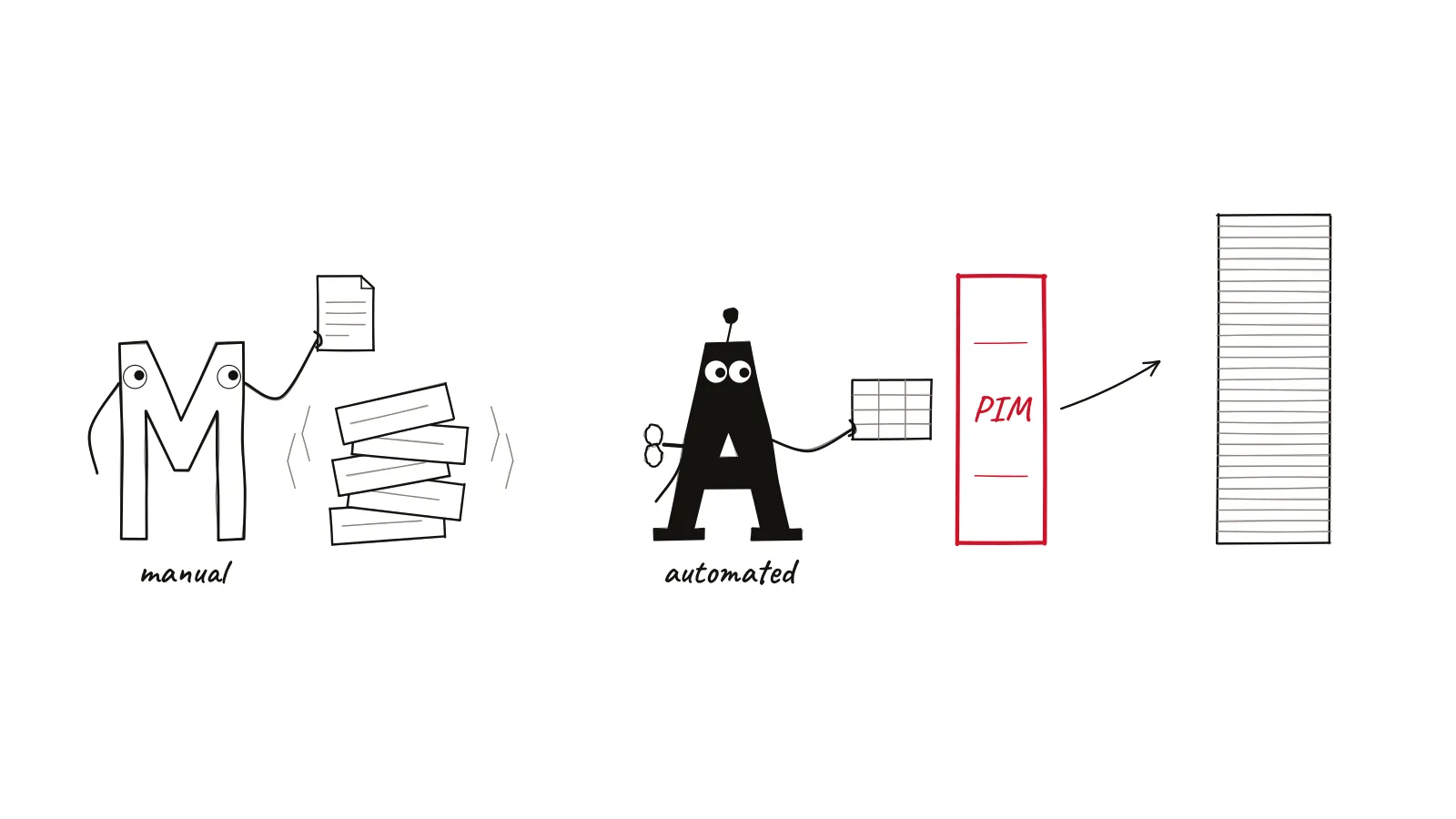
Automatic spec sheets
You need a system that generates spec sheets from a database with all the product information. This is where a PIM (Product Information Management) system comes in. A PIM connected to a server, with a daily job that generates up-to-date spec sheets, is a simple but elegant solution. You can also create a link that generates the spec sheet on demand, when someone clicks it. Both make the process automatic.
We have millions of variants: CCT, CRI, power, size, colour. Maybe you want one spec sheet per variant. Maybe you want a product configurator that ends with a custom spec sheet. Either way, it comes back to the same system: a PIM, or let’s call it a database, where the data stays up to date.
A spec sheet can only be as up to date as the data it comes from.